Stop guessing what's on your airwaves.

A digital and physical tripwire. It reads everything on 2.4 GHz and learns what belongs. Anything that doesn't gets flagged, from a single home to a whole perimeter.

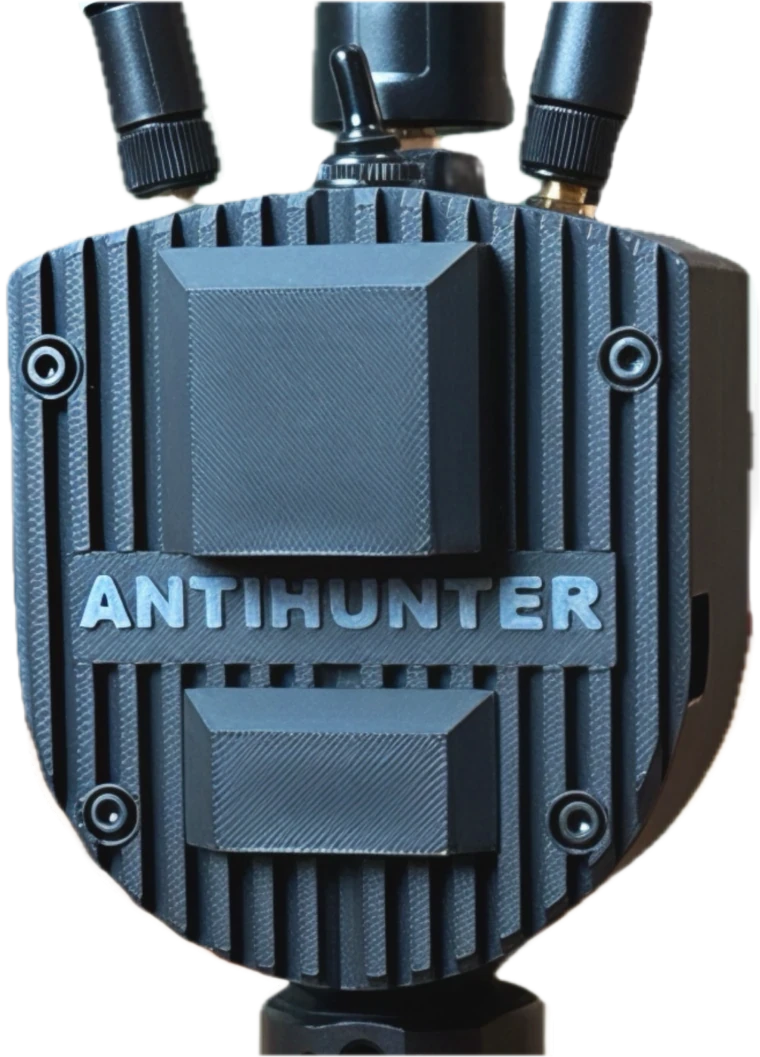
AntiHunter field node, weatherproof enclosure with antennas
No cloud needed, no subscription Seeed Best 20 XIAO Projects of 2025 Open source

How it compares.

WiFi, BLE, drone IDs, active attacks, and vibration on tamper. AntiHunter puts it on a ~$250 node—18650 or solar, LoRa mesh, no infrastructure, no fees. Enterprise sensors cost ~60× more and stay fixed. AntiHunter goes where the threats move.

AntiHunter Dedrone RF-360 Bastille WiFi Pineapple ESP32 Marauder
Price per sensor ~$250 $58,000/site Quote only ~$120–300 $10–160
Signals detected WiFi, BLE, drone ID, attacks Drone RF WiFi, BLE, cellular WiFi WiFi, BLE
RF coverage 2.4 GHz, 5 GHz w/ C5 Drone bands 25 MHz–6 GHz 2.4 / 5 GHz 2.4 / 5 GHz
Battery / field deployable Yes, 18650 or solar No, PoE / AC No, PoE / AC No, USB / AC Yes, handheld
Long-range mesh, no infrastructure Yes, LoRa No No No No
Physical / tamper sensing Yes, vibration sensor No No No No
Open source Yes: firmware, STLs, C2 No No Partial Yes: firmware + STLs
Recurring fees None License Subscription None None

Home, fence line, or full site.

One unit at home, several around a perimeter, or a full set across a site.

At home

One unit learns your home's usual devices.

You hear about it when something new appears, leaves or reappears.

Down a property line

Line the fence posts with units that feel movement and learn who belongs.

When a stranger's device is in range, it alerts you.

Across a site

Sentinel names the tool behind a WiFi attack and ties an attacker's changing addresses into one.

Three or more GPS units trace where it's coming from.

Off the grid

Runs on batteries over LoRa, fully headless, no infrastructure. Supplement with solar.

It catches drones by their Remote ID, and wipes to a decoy weather-monitor file if a unit is grabbed.

One node does the work of a rack.

WiFi, Bluetooth, drones, and the attacks aimed at you, all from a device that fits in your palm. Each unit runs one job at a time. A mesh of them covers everything at once.

Every WiFi and BLE device nearby.

Phones, watches, earbuds, cameras, and the networks they quietly look for. It learns which ones belong and flags the ones that don't, even when a device is trying to hide its address. In development: Drop in the ESP32-C5 and it reaches across 2.4 and 5 GHz.

2.4 GHz WiFi + BLE · 5 GHz with C5Baseline anomaly detectionSpots hidden devices
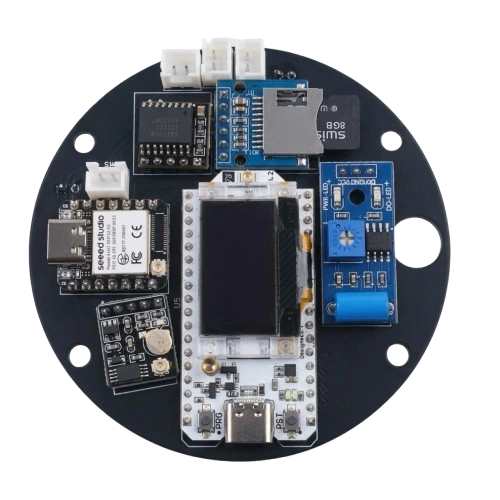
AntiHunter DIGI node board, fully populated

It spots an attack, names the tool, maps it.

It flags WiFi attacks the moment they start, common and advanced alike: knocking devices offline, faking your network, stealing passwords, and plenty more. Then it names the tool behind it, from software like bettercap, mdk4, and wifite to handheld gadgets like Marauder. Can be set to trigger triangulation when 3+ nodes exist.

Deauthentication attacksFake APsPassword attacks
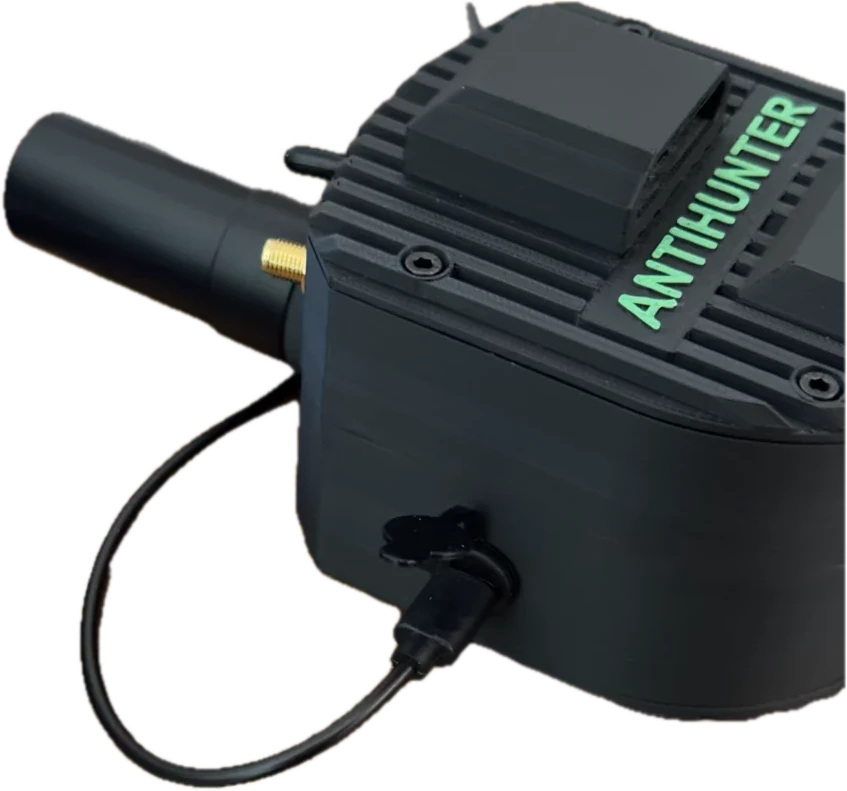
AntiHunter node close-up with weatherproof USB-C cap and connectors

Runs where few others can.

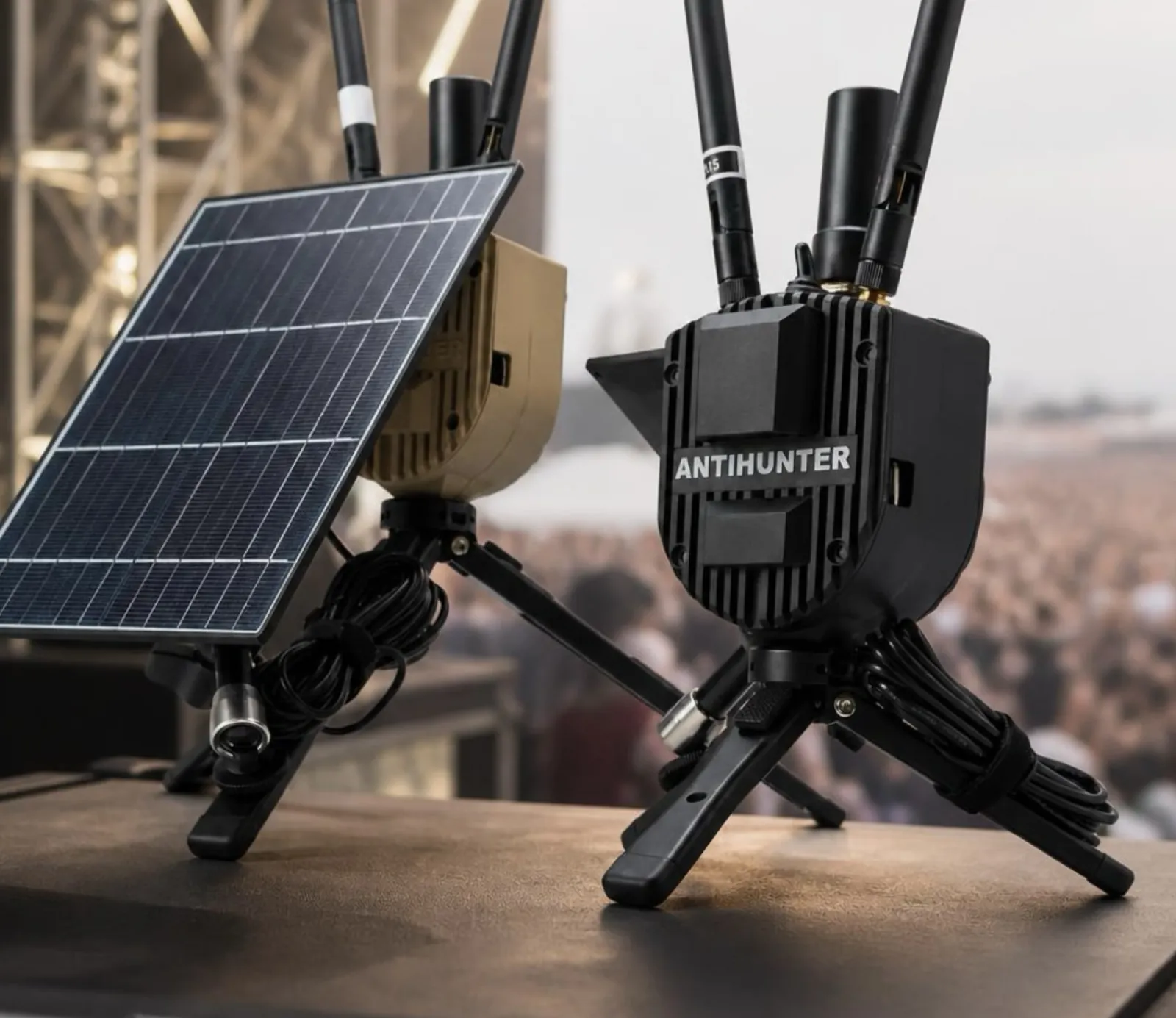
Power it from USB, a battery, supplement with a 5v solar panel. It runs unattended, with no screen to check, and shrugs off rain, dust, and heat for months at a time.

USB · battery · solarWeatherproofRuns for months
AntiHunter nodes deployed outdoors

Control it however you like.

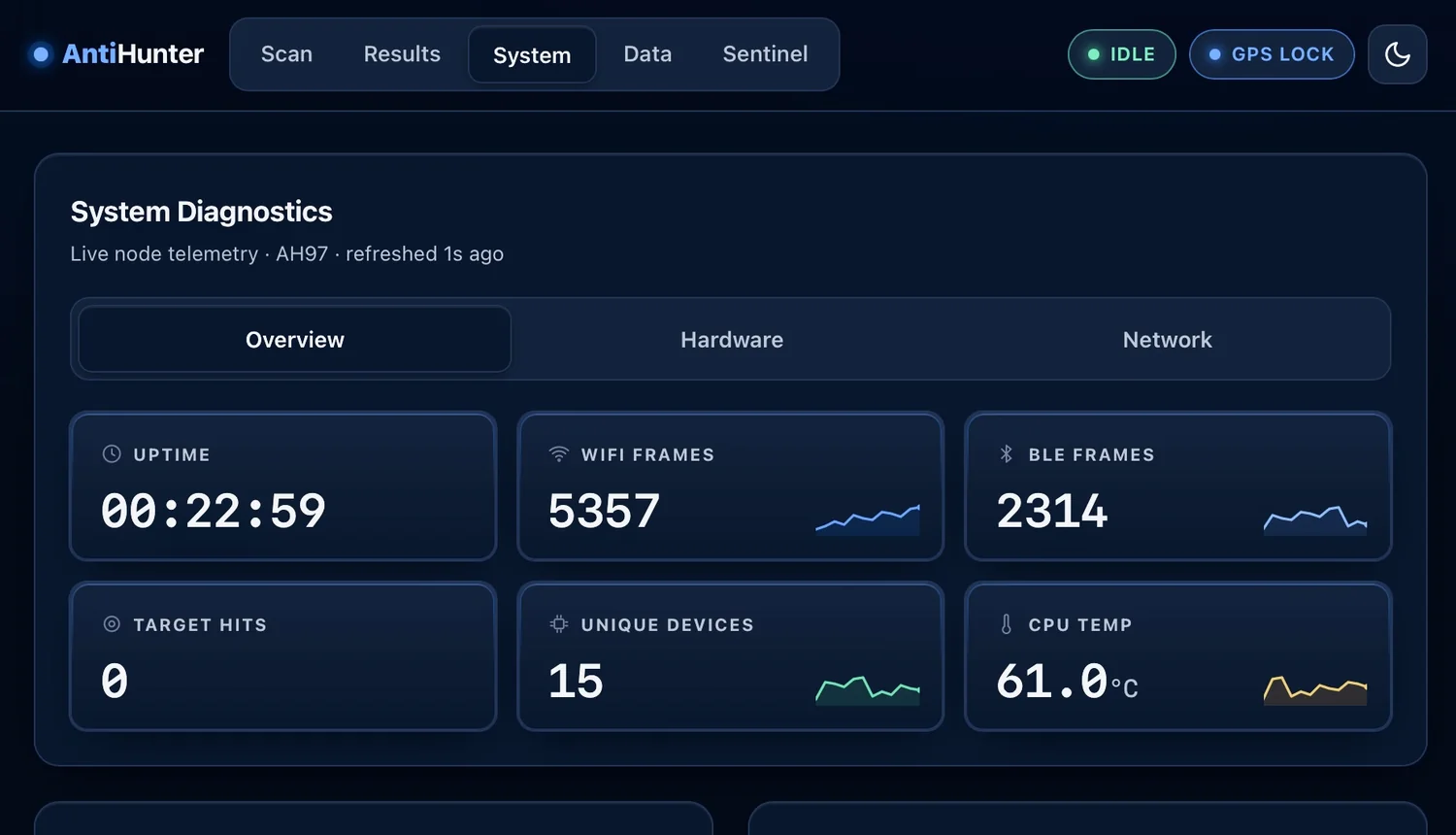
Drive a node from the web dashboard over its own WiFi, or text commands to it over the Meshtastic mesh from miles off — no WiFi in the loop, a single unit runs from just a radio. It replies with live status and pushes detections the moment they happen. Everything saves to the SD card and can feed your IDS or SIEM, and rides the mesh to any Meshtastic app, TAK, or MQTT. Open source, so you can wire in commands of your own.

Web dashboardMesh commandsMeshtastic appTAK / ATAKMQTT155-route JSON APIData Explorer
AntiHunter web dashboard on a tablet, served from the node's own WiFi
Meshtastic · @AH01
@AH01 STATUS
AH01: STATUS: Mode:WiFi+BLE Scan:IDLE Hits:0 Temp:41.2C Up:03:14:07
AH01: DEAUTH_FLOOD:9C:B6:D0:1F:22:E3:214:-38pushed on detection

What it watches for.

Each unit runs one of these at a time. Spread them across a mesh to watch for everything at once.

What's around you
Map every signal in range
  • Device scannerEvery WiFi and BLE device in range: address, signal, name, channel. 2.4 GHz, with the ESP32-C5 in testing.
  • Probe + ghost networksThe networks a phone is searching for, revealing home, work, and past locations.
  • Target watchlistAlerts the moment a specific device, vendor, or network shows up.
  • Baseline anomalyLearns what's normal, then flags anything new or gone.
  • Sees hidden devicesLinks a device's changing addresses back to one identity. (experimental)
When you're targeted
Catch the attack, name the tool
  • SentinelFlags WiFi attacks, common and advanced, and names the tool behind them: bettercap, mdk4, wifite. (beta)
  • Deauthentication attacksCatches devices forced off WiFi, and flags which one is doing it.
  • Cross-checkedOn a mesh, nodes cross-check each other's detections. Configurable threshold; outlier rejection at five reports.
  • Attack-triggered locateA confirmed attack kicks off a 60-second locate. Needs 3+ units with GPS.
Airspace
Detect drone Remote ID
  • Drone Remote IDReads a drone's ID, telemetry, and the pilot's location, over WiFi and BLE.
  • Spoof checkTwo units with GPS flag a drone lying about where it is.
Where it's coming from
Put a signal on the map
  • TriangulationWith three or more GPS units, roughly locates a signal and drops a pin on the map. (in-testing)
  • Aggregated over mesh for weighted trilateration with Kalman filtering
The device itself
Protect the device
  • Vibration triggerA bump starts a scan you choose, or wipes the SD and leaves a decoy weather-monitor file. Remote wipe over mesh.
  • Privacy modeOne tap hides addresses and locations before you share a screenshot.
  • Self-recoveryFixes a broken config on boot; logs self-heal.

Pick where you start.

Everything is open source: firmware, enclosure files, and the Command Center. Buy a stage, or clone the repo and source your own parts.

Solder it yourself · bring your own parts
Bare PCB
$20
  • One bare DIGI Node board, 82 mm, 2-layer, copper ground plane
  • Unpopulated: you add the modules, connectors, and antennas
  • Full parts list and assembly manual in the repo
  • The cheapest way onto the platform
View product →
Hobbyists · the core product
Soldered Core PCB
$180
  • 82 mm 2-layer board, copper ground plane
  • XIAO ESP32-S3, Heltec LoRa V3.2, ATGM336H GPS
  • SW-420 vibration, micro-SD, DS3231 RTC, 6× JST 2.54
  • 8 GB microSD card, FAT32. 16 GB also works
  • Soldered, mesh flashed, bench-tested. U.FL antennas included
  • Flash and deploy
View product →
Weekend builders
Parts Kit
$250
  • Everything in the Soldered Core PCB
  • 6 dBi WiFi + LoRa antennas, 3× U.FL→SMA pigtails
  • Printed enclosure kit, TPU seals, prewired fan, all fasteners
  • Thermal switch, waterproof toggle and USB-C, 2S 18650 UPS board
View product →
Deploy today · Parts Kit plus
Assembled
$350
  • Assembled, mesh flashed, tested. Flash and deploy
  • Everything in the Parts Kit
  • Active GPS helix SMA antenna
  • 8 GB microSD card, FAT32. 16 GB also works. Add batteries and place it
View product →

One unit, or a whole network.

Drop in a single unit and it watches on its own. Add more and they work together, sharing what they find over long-range LoRa that reaches for miles, with no internet or cell service in the loop via Meshtastic.

01 · On its own

Every unit watches

Each one scans the airwaves around it and saves what it sees, right on the device.

02 · Together

They share by radio

They talk to each other over long-range, miles apart, with no internet or cell service in between, so one catch reaches them all. With three or more, they can roughly work out where a signal is coming from, their clocks kept in sync by GPS.

03 · One view

It lands on one map

The optional Command Center pulls every unit onto a single live map, so you see the whole picture at a glance.

Scale up with the Command Center.

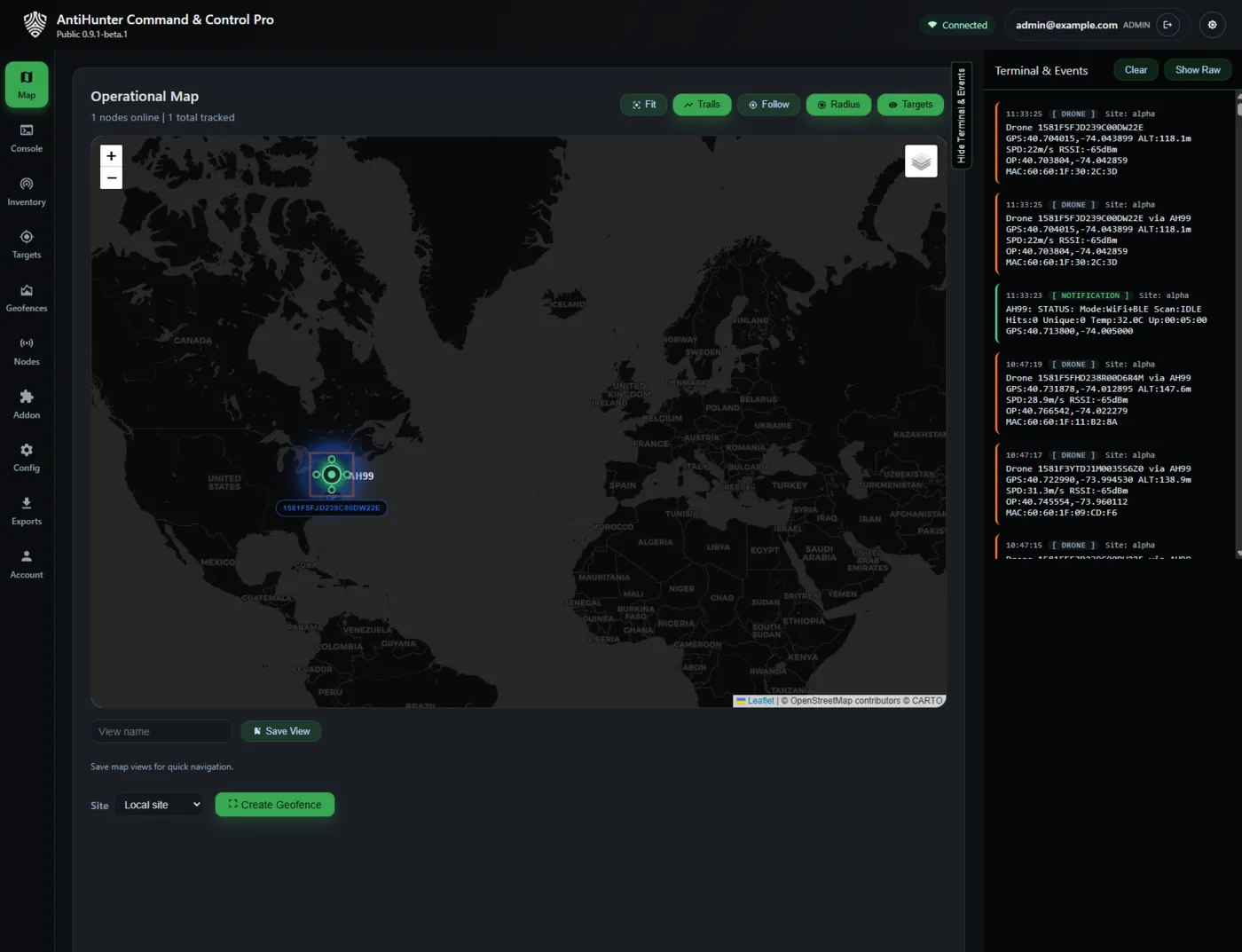
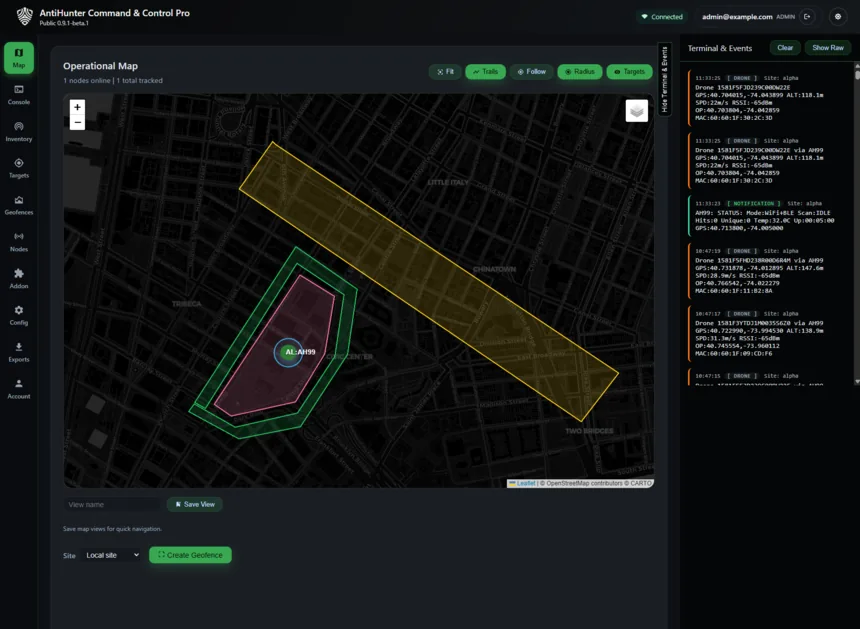
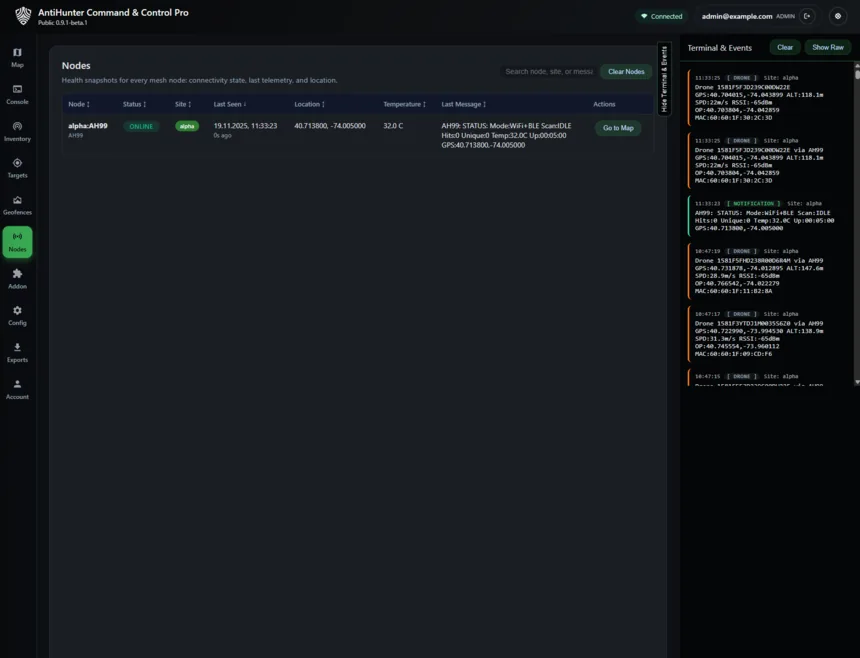
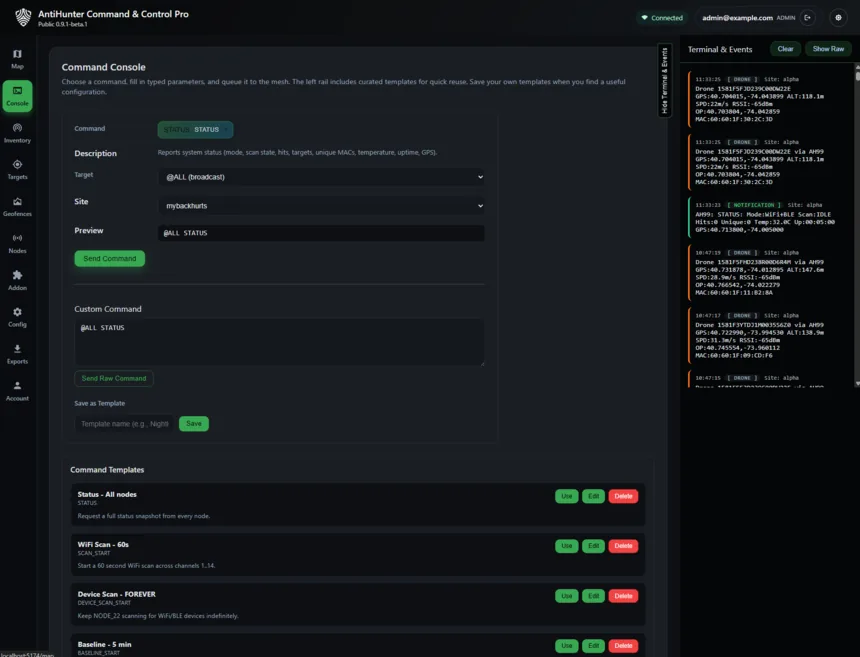
Connect your mesh to the open-source Command Center and it becomes a full operations platform. Track every unit, drone, and aircraft on one live map. Add geofence alarms, FAA registry lookups, webhooks, TAK bridging, and multi-site federation. You host all of it, on your own hardware.

AntiHunter Command Center operational map, node tracking, drone detections, live event feed
Geofence creation and alarm configuration
Geofences & alarms
Mesh node health monitoring
Node health
Command console for launching detection workflows
Command console
Map & tracking
Live map & trailsDrone + operator trackingMulti-node triangulation
Airspace
ADS-B & ACARSFAA registry lookup
Alerts
Geofence alarmsScheduler
Integrations
TAK / CoT · ATAK · WinTAKMQTT federation
Security & data
RBAC + 2FAFirewall & geo-blockCSV / GeoJSON export
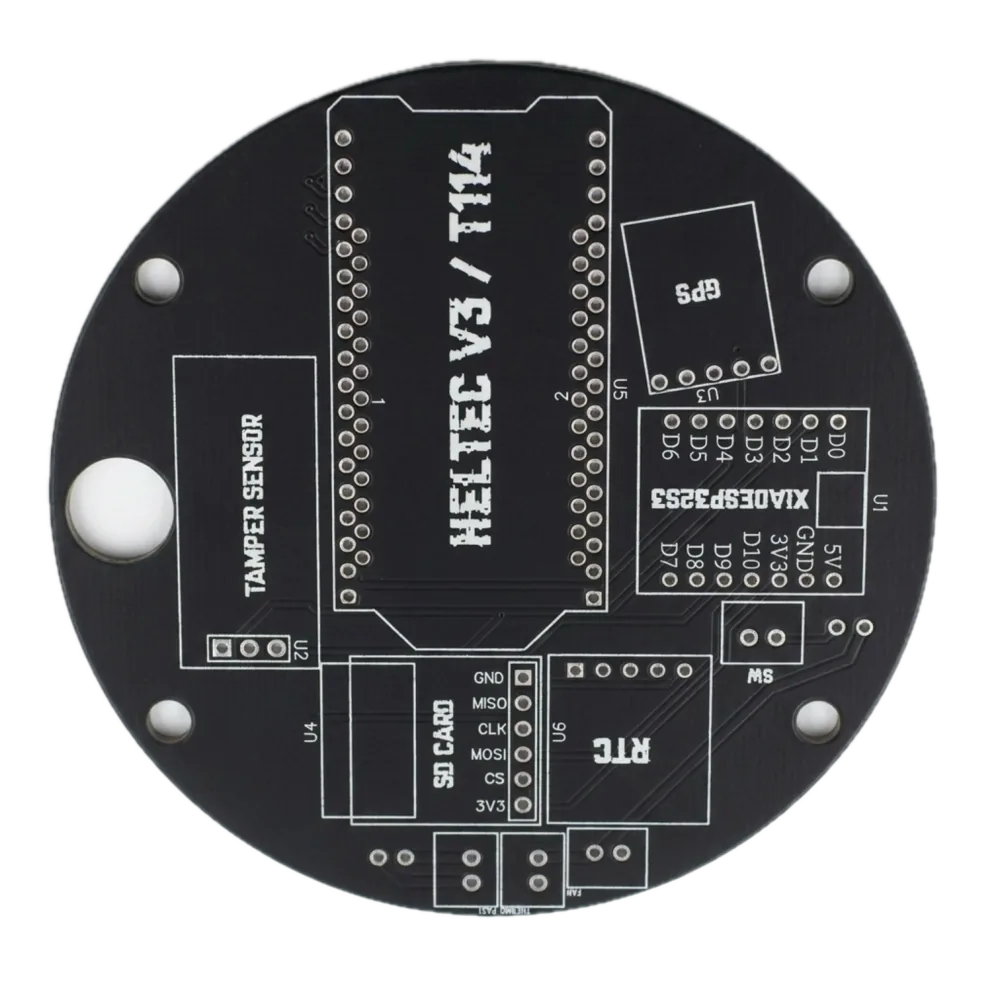
AntiHunter DIGI node board, bare 82 mm PCB with silkscreen

Everything on one 82 mm board.

Documented, buildable, and fully open. Buy it assembled, as a parts kit, or as a bare board.

ComputeSeeed XIAO ESP32-S3 · 8 MB flash
MeshHeltec LoRa 32 V3.2 (or T114)
Radios2.4 GHz WiFi b/g/n + BLE, 5 GHz with ESP32-C5 · LoRa 868/915/923
SensingATGM336H GPS · DS3231 RTC · SW-420 vibration
Power5 V USB-C · 2S 18650 UPS, 15 W fast-charge · 5 V-solar capable
Endurance80 MHz battery-saver mode · log rotation · self-healing config
SealingTPU gaskets + waterproof USB-C cap · sits outside
OpenAGPL-3.0 · browser flasher + CLI + PlatformIO

New hardware, same mesh.

Built in the open. Here's what's on the way: new hardware and drop-in upgrades that join the same mesh, map, and alerts.

In testing

ESP32-C5 · 5 GHz

The C5 drops into the same PCB and adds 5 GHz scanning: the board you have, a different chip, no redesign. Upcoming version release (fine-tuning in progress).

In active development

RADAR Node

An ESP32-C5 that pairs RF traffic with physical presence, out to 100 m, to build a baseline of what's normal. It sends what it finds over the mesh to the other nodes and the Command Center.

Exploring

SDR Node

A software-defined-radio companion we're exploring, to watch a much wider slice of spectrum, well past WiFi and Bluetooth.

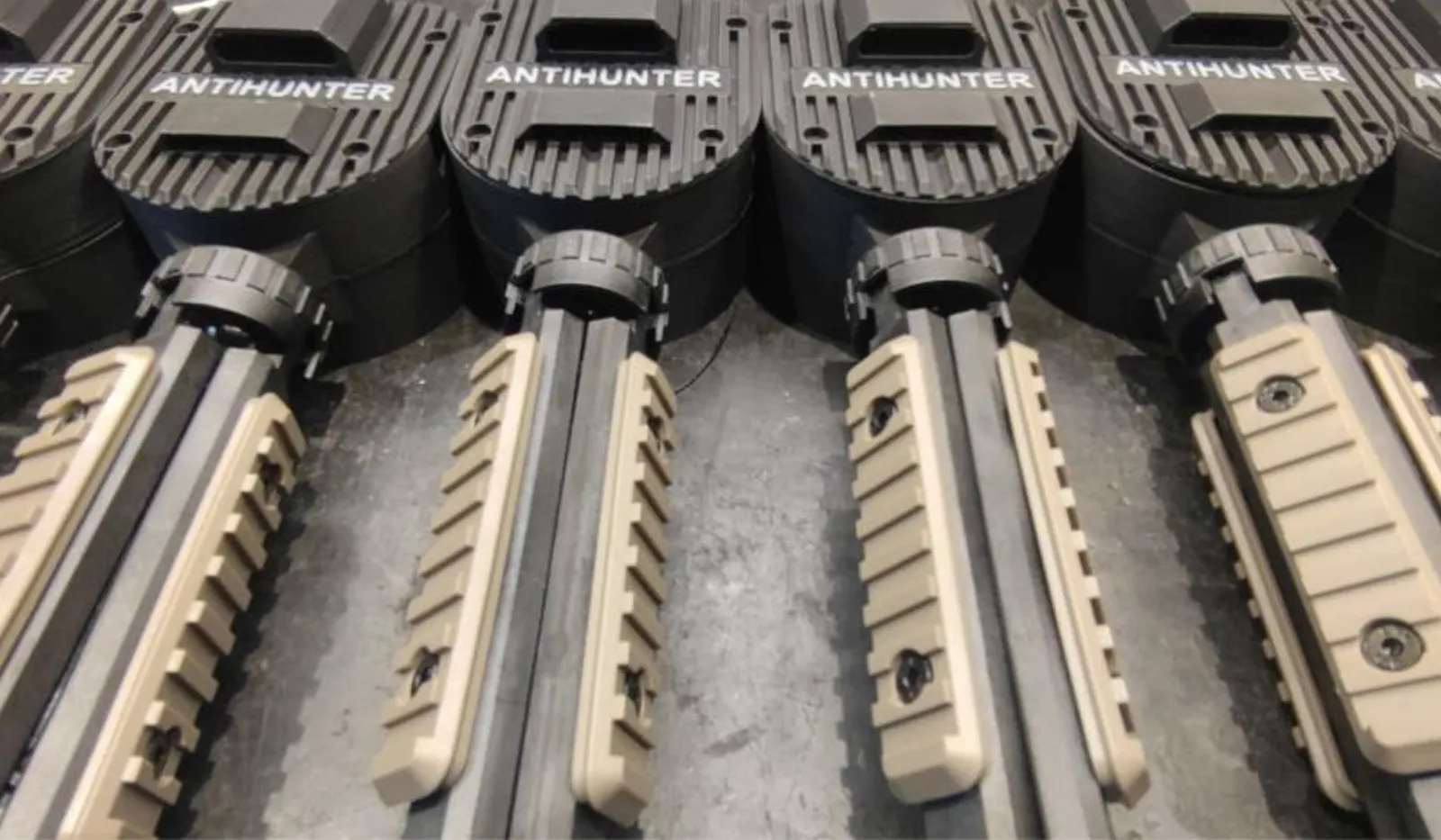
A batch of AntiHunter nodes being assembled by hand

Made in small batches, by hand.

Every board is printed, populated, mesh flashed, and bench-tested before it ships. Flash and deploy.

Put it up and walk away.

Start with a bare board or a finished unit. Flash it in your browser, hang it where you need eyes, and let the mesh do the watching. Open source, no subscription, community-built.

Defensive by design.

AntiHunter watches your networks, your events, your perimeter. It detects and logs. It never attacks. Every line is open source and built with the community, so you can read it, flash it yourself, and make it your own. Your data stays on your SD card, on your own hardware.